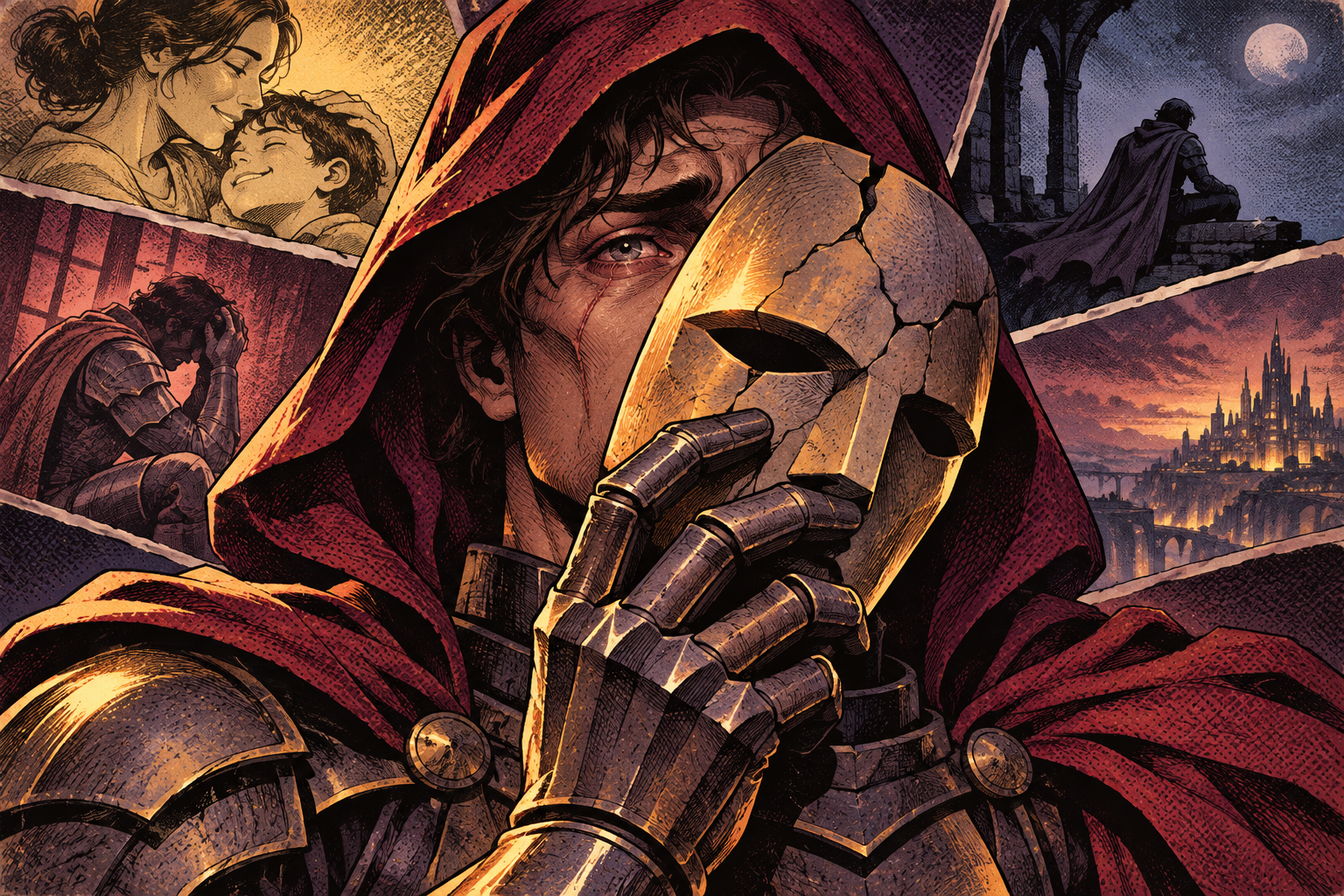
A villain begins explaining why they did it.
The hero is restrained. The city is in danger. Somewhere, a machine is counting down. Yet the villain takes time to describe a betrayal, a humiliation, a loss, or a truth everyone else refused to see.
We often call this the villain’s monologue. Sometimes it serves a practical purpose: the audience needs to understand the plot.
But it also reveals something worth examining.
The villain wants a witness.
Someone must finally understand how they arrived here. Someone must acknowledge what happened, recognize the logic, or admit that the person dismissed as powerless can now make the world respond.
Comic books give that desire extraordinary scale. A private grievance becomes a threat to a city. A struggle over recognition becomes a battle over reality itself.
Beneath the spectacle is a familiar human question:
Can you understand what happened to me without turning away?
The answer matters. So does what a person believes that understanding entitles them to do.
The Difference Between Being Seen and Being Obeyed
Being understood can mean having another person recognize your experience accurately.
They hear what happened. They grasp why it mattered. They can disagree with your conclusions while taking your experience seriously.
But the desire for recognition can change.
A person may begin by asking, “Can you see why I am angry?” and eventually demand, “If you understand my anger, you must agree with what I do.”
Those are different requests.
The second makes agreement a condition of empathy. It leaves little room for another person to acknowledge the injury while challenging the response.
Villain stories often bring this conflict into view. The villain wants the hero to understand—and then treats the hero’s continued resistance as proof that understanding never occurred.
But someone can understand your reasoning and still oppose your actions.
They can recognize a wound and refuse to help you pass it on.
Magneto: When Protection Becomes a Struggle Over Power
Magneto is compelling partly because many portrayals give his fear a recognizable foundation.
His history as a Holocaust survivor shapes his conviction that persecution must never be allowed to reach the same conclusion again. The danger mutants face makes that fear central to his conflicts with the X-Men.
Across different stories, his methods and moral position vary. He has been an enemy, an ally, a leader, and a teacher. That variation matters: his character cannot be reduced to one permanent role.
Still, a recurring question follows him:
What becomes permissible when you believe catastrophe will return unless you act first?
Protection can become entangled with domination. Fear can make compromise seem reckless. Opposition can appear to confirm that nobody else understands the danger.
Readers do not have to dismiss the danger to examine those conclusions.
That is what makes the character useful for reflection. His experiences deserve recognition, while his choices remain open to judgment.
Understanding why someone fears powerlessness does not settle how they should use power.
Mister Freeze: When Grief Demands an Exception
In the influential version of Mister Freeze developed in Batman: The Animated Series, Victor Fries’s devotion to his wife, Nora, gives his story its emotional center.
The premise makes his desperation legible. He wants to preserve someone he loves. His losses help explain why he becomes willing to harm others in pursuit of that goal.
The audience is invited to feel something more complicated than satisfaction when Batman stops him.
We can grieve what happened to Victor while recognizing the danger he creates.
His story raises a painful question:
How much should the world be required to surrender because my loss feels unbearable?
Grief can make an exception feel morally obvious from the inside. The person you love cannot be replaceable. Their survival cannot be merely one concern among many.
Yet other people also have lives, attachments, and claims to safety.
The tragedy becomes sharper when a character can recognize the immeasurable value of one person and lose sight of that value in everyone else.
Doctor Doom: When Recognition Must Become Supremacy
Doctor Doom often brings another form of the struggle into view.
He wants his intelligence, authority, and achievements recognized. His rivalry with Reed Richards repeatedly turns recognition into a contest he must win.
Across portrayals, Doom can be brilliant, capable, proud, protective, and ruthless. Those qualities create tension because competence does not resolve the question of how he treats other people.
His recurring claim to superior judgment raises a difficult issue:
If I believe I know what is best, what gives anyone the right to refuse me?
That question becomes dangerous when the answer is “nothing.”
Being capable does not make a person infallible. Having insight does not grant ownership over another person’s choices. Even an accurate criticism of someone else leaves questions about your own conduct unanswered.
Doom’s struggle is often larger than wanting someone to admit he is right. He wants a world arranged so that his superiority cannot be denied.
Recognition becomes something he must enforce.
Explanation Can Become a Shield
A backstory helps us understand a character’s actions. It can also tempt us to stop examining them.
We learn about the betrayal, abandonment, or loss. Suddenly, the harm that follows begins to feel like an inevitable continuation of the story.
But an explanation can contain several kinds of information.
It may identify pressures, vulnerabilities, beliefs, opportunities, and decisions. Those details help us see how events unfolded. They do not automatically establish that every later action was unavoidable or justified.
The same distinction matters outside fiction.
“I learned to expect betrayal” can help explain why trust is difficult.
It does not make every accusation accurate.
“I was repeatedly dismissed” can help explain an intense need to be heard.
It does not remove other people’s right to disagree.
A person’s history belongs in an honest account of their behavior. So do the effects of that behavior on others.
We Should Be Careful About Whom We Call a Villain
Comic books create dramatic roles. Human lives are harder to divide cleanly.
Someone can behave destructively in one relationship and responsibly in another. A person can cause harm, recognize it, and change. Someone can also use a moving explanation to avoid meaningful accountability.
None of these possibilities is resolved by assigning a label.
Nor should a villain’s fictional suffering be treated as evidence that trauma, grief, or mental illness makes real people dangerous. Stories select and exaggerate for dramatic effect. They are not a reliable guide to predicting someone’s character from their history or diagnosis.
The useful question is more specific:
What is this person doing, what is its effect, and how do they respond when that effect is named?
That question gives us more to examine than deciding who belongs permanently on which side.
The Hero Also Needs Someone to Understand
The need for recognition does not belong only to villains.
Heroes carry grief, secrecy, anger, and the burden of being misread. Their relationships often matter because another person can see them beyond the costume or public role.
And heroes can become rigid, controlling, or destructive themselves.
What makes these stories interesting is the continuing struggle over how characters respond to suffering and power. They may accept correction, reject it, repair a relationship, or repeat a damaging choice.
Sometimes an enemy becomes an ally. Sometimes a trusted hero must answer for what they have done.
Those changes keep the moral question alive.
The need to be understood is widely shared. What a character asks others to sacrifice for that understanding reveals something about the direction they are taking.
A Question to Carry Beyond the Page
Think of a fictional antagonist whose explanation moved you.
What did they want someone to recognize?
A loss? A betrayal? Their ability? A danger others underestimated?
Then ask:
What did they begin demanding in exchange for that recognition?
Perhaps they wanted agreement. Perhaps immunity from consequences. Perhaps control over other people’s futures.
Now turn the question gently toward yourself:
- What do I most want someone to understand about my experience?
- Have I explained it clearly, or am I expecting them to infer it?
- Can I recognize understanding when it comes with disagreement?
- What responsibility remains mine, even when my hurt is real?
You do not need to identify with a villain’s actions to learn from the conflict a story presents.
Sometimes fiction gives us enough distance to examine a demand we would struggle to recognize in ourselves.
Being Understood Leaves Us With Choices
A witness cannot undo every injury.
Someone may finally believe you, grasp what you lost, or recognize the fear beneath your anger. The consequences of your experience may still require care, support, and difficult decisions.
Understanding can make those decisions less lonely. It cannot make them for you.
That is one reason the villain’s monologue stays with us. For a moment, the spectacle pauses and a person asks to have their story heard.
We can listen closely.
Then we can examine what they choose to do next.
Subscribe to The Nomothete for more explorations of psychology, philosophy, storytelling, and the choices through which we become.
Leave a Reply